


Free agency has wrapped up and the coaching carousel has stopped spinning. Before draft season kicks into full gear, it’s worth taking a close look at the defensive coordinator changes across the league and what they mean for your IDP leagues in 2026.
Below, I break down the new defensive coordinators, their defensive schemes, and the specific players worth targeting as a result.
Baltimore Ravens
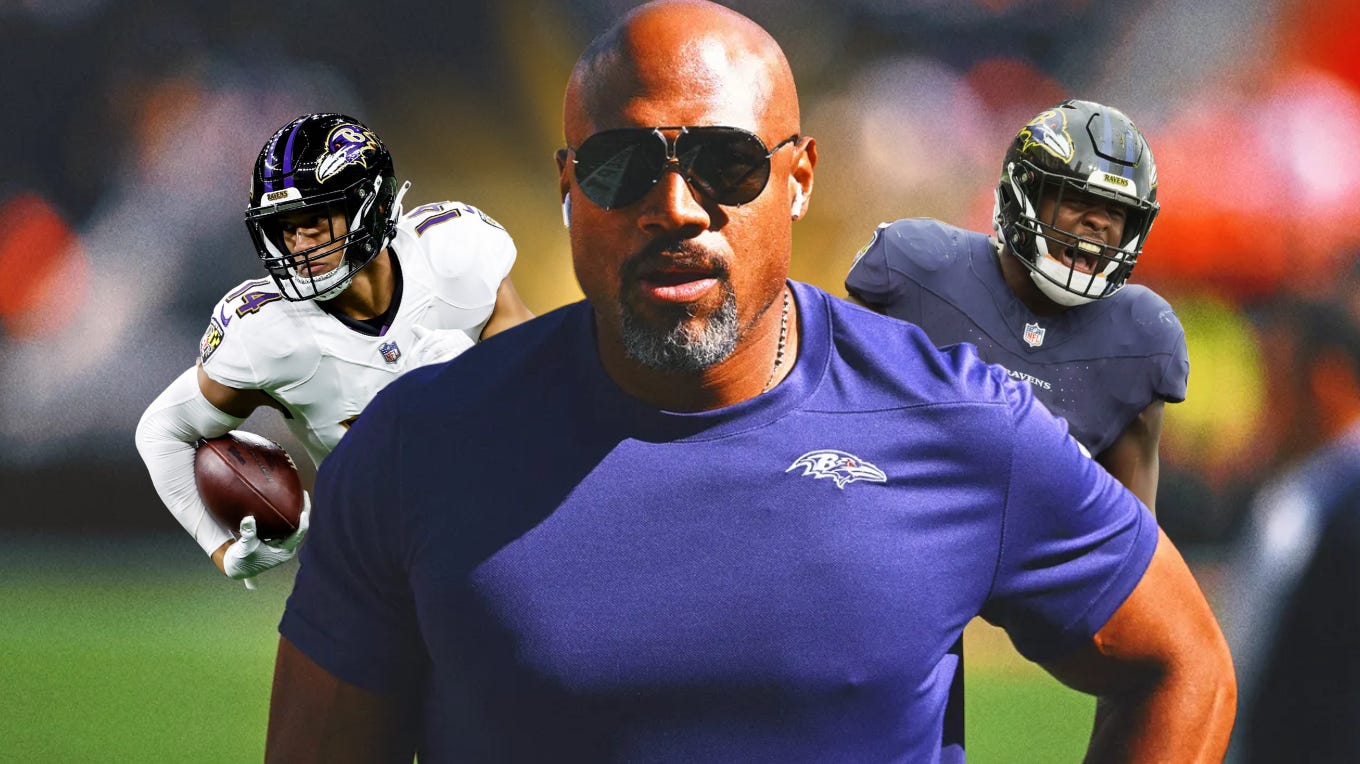
The Baltimore Ravens moved on from John Harbaugh as their head coach and didn’t bring back Zach Orr as their defensive coordinator. The Ravens brought in Chargers’ defensive coordinator Jesse Minter as their new coach, and he brought along Anthony Weaver to head the defense.
What does this mean for the Ravens’ IDPs?
Defensive Philosophy
I’m sure Minter will have his fingerprint on the defense, but Weaver is a solid coordinator who’ll have his DNA all over the defense.
His philosophy is simple: a physical, connected, and flexible defense. Blitzing should be intentional, and not just for the sake of blitzing. The Dolphins had a 30.4% blitz rate, so I am expecting something similar with Baltimore.
He requires a fast and physical defense that is fundamentally sound and swarms the ball. He wants pressure, but not at the sacrifice of fundamentals.
Although these are just a few snapshots, these were his two most deployed lineups with Miami last year.
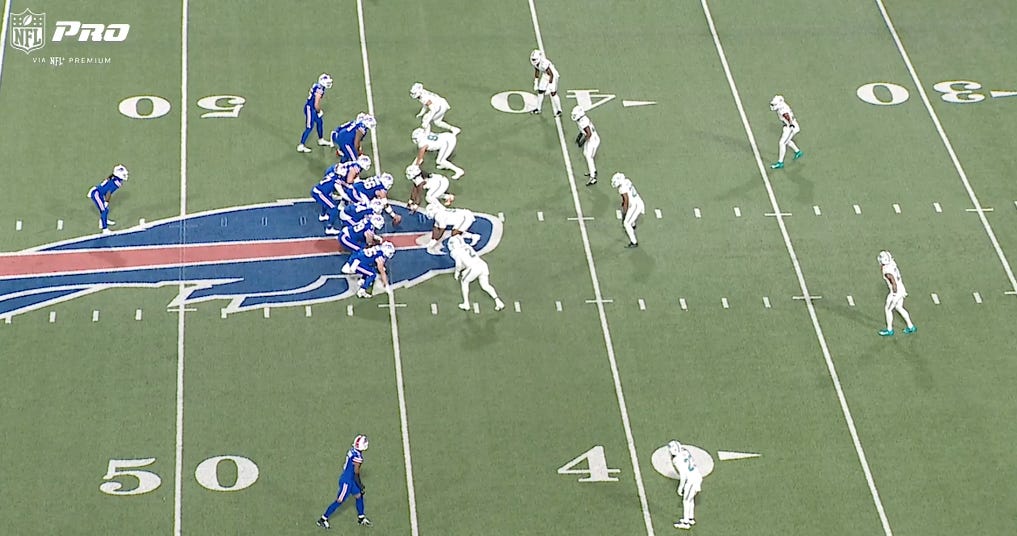
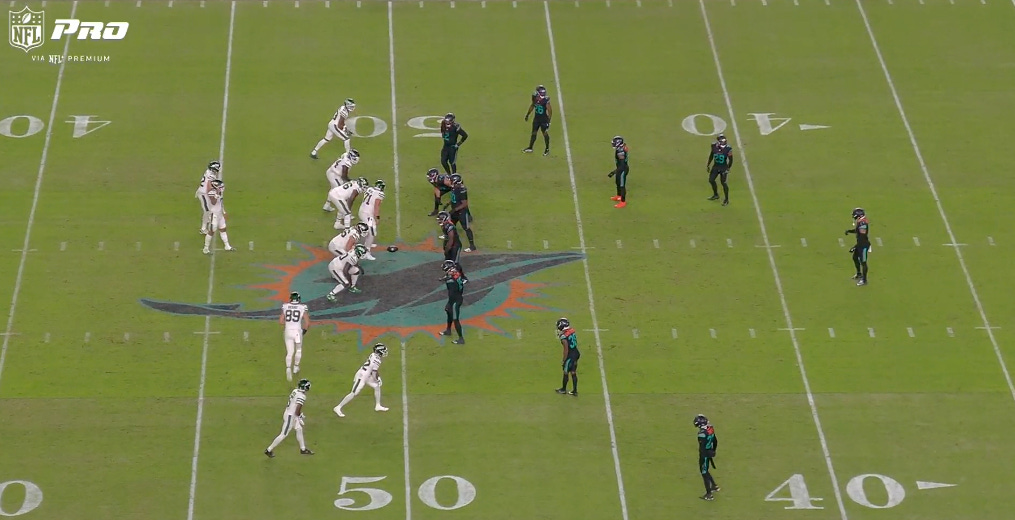
His system is a multiple-front modern NFL defense, as opposed to a rigid 4-3/3-4. He’s used his base fronts, but will use 4-man/5-man, and heavy disguises.
Defensive Line/EDGE Unit
The Ravens almost acquired one of the top edge rushers in Maxx Crosby, but let’s face it, they got cold feet at the thought of losing multiple draft picks for a player, potentially, on the downswing. However, they landed Trey Hendrickson as the consolation.
Weaver’s scheme should benefit Hendrickson and the returning Nnamdi Madubuike. Mike Green should also benefit from Hendrickson’s presence. Weaver is a former DL coach and will scheme pressure for his line. There’s also TFL upside for the interior, as he helped Zach Sieler become one of the top IDLs in the NFL.
The scheme might create pressure from anywhere, so sack equity might be distributed, but I don’t see deep rotations. I’d expect Hendrickson to have a full-time role, and if Green shows his development, he could be a 60% snap guy.
Linebacker Unit
I think Weaver’s unit will be a benefit for Roquan Smith and whoever wins the LB2 job. Weaver’s defenses were primarily nickel/2-LB defenses with Jordyn Brooks and Tyrel Dodson.
His fronts benefit LBs with pressure design and open gaps. However, his fronts could prevent funneling to one off-ball LB. I still think Smith is the alpha here. He’ll also blitz his linebackers, much like he did with Dodson, so there’s upside for big plays (sacks, TFLs).
Defensive Back Unit
Weaver wants DBs who fly around, make hits, and, in some cases, disguise pressures. Safeties and nickels could be the beneficiary here. He also values versatile DBs who can rotate, trigger downhill, and adapt to assignments.
Kyle Hamilton should be one of the biggest beneficiaries, especially since he’ll be reuniting with his former DB coach at Notre Dame. Hamilton should play close to the box and see some slot duties. I think whoever wins the nickel role will also have IDP value.
IDP Targets for 2026
I’m targeting Namdi Madubuike (if he’s healthy), Trey Hendrickson, Mike Green (DL3/4), Roquan Smith, Kyle Hamilton, Marlon Humphrey
Buffalo Bills
The Bills decided they were going as far as they could go with Sean McDermott. So they fired him just after the 2025 season and promoted Joe Brady to head coach. Brady decided against retaining Bobby Babich and went with Jim Leonard as his defensive coordinator.
Although Leonhard doesn’t have NFL experience as a coordinator, he does bring NFL defensive coaching experience as a DB coach, pass game coordinator, and assistant head coach with the Denver Broncos. He served as the Wisconsin defensive coordinator from 2017-2022, so I wouldn’t necessarily call him green.
Defensive Philosophy
Leonhard has stated he’s going to be aggressive. Up front and in the defensive backfield. He’s going to chase the ball and generate turnovers. He also wants to fit his players’ skills, rather than be rigid and force the players into the scheme.
Disruption will be key to turnovers.
It does look like he’ll run a 34 base, utilizing his outside linebackers in both the pass rush and coverage. While I don’t expect them to be in their base, they’ll utilize modern concepts, such as multiple fronts with 5-man pressure. I would also expect a similar blitz rate to Denver’s 32.1% number in 2025.
Defensive Line/EDGE Unit
Overall, I’m expecting big plays, but maybe not as many tackle attempts. Leonhard’s scheme is going to generate pressure and open up those rush lanes. The disguises and confusion will create sack opportunities, even if they don’t win the block.
Bradley Chubb and Gregory Rousseau should benefit on the outside, as they’ll be asked to go get the QB. Rousseau has the length and versatility to fit in this structure. The 34 shift might cap the tackle numbers for Ed Oliver. He might be asked to be more of a space occupier who disrupts the QB and gets the occasional sack.
Linebacker Unit
In Leonhard’s scheme, the outside linebackers generate the pressure, and the interior occupy space, so they’ll have tackle upside. However, if the pressure is consistent, they could lose out on tackle opportunities. More throwaways and scrambles.
Terrel Bernard looks to be the green dot, but I’m concerned for his tackle floor in this scheme. If he is the dot, volume is in his favor. This is more of the scheme projection. Dorian Williams is a risky LB3 in this role, especially if Leonard favors more dime/single-LB packages or favors a rotation on specific packages.
Defensive Back Unit
I think this unit might benefit the most from Leonhard’s scheme (shocker, considering he was a DB himself).
He’ll lean into coverage disguises, versatility, and attacking from the backend. This group is going to be challenged to force turnovers.
Cole Bishop might be the biggest beneficiary here. He led the Bills in tackles (85) and added 3 INTs. Last season’s usage showed his versatility at the safety position, and this is the profile Leonhard can unlock and weaponize.
CJ Gardner-Johnson has a similar profile: a safety who can play physical in the box, cover the slot, and be a ball hawk deep. His floor depends on whether he’s a full-time player or a rotational piece.
Dee Alford could be the slot and have some IDP value in deeper leagues if Leonhard deploys more nickel.
IDP Targets for 2026
In big play leagues, I’m targeting Rousseau and Chubb. Ed Oliver is a DT-required target only at this point. I’m a bit lower on Bernard in this scheme, but if he wins the dot, he’s an LB2/3. I like Bishop as a potential DB breakout; target him as a DB3.
Cleveland Browns
The Browns ended up letting Kevin Stefanski go, and Jim Schwartz decided against returning as the defensive coordinator after the Browns decided to go with Todd Monken as their new head coach.
Monken ended up going with Mike Rutenberg as his defensive coordinator. Rutenberg doesn’t have any coordinator experience, but has defensive coaching experience and has drawn praise around the league as an up-and-coming defensive mind.
Defensive Philosophy
As far as the Browns’ scheme, Rutenberg is going to maintain their four-down, attack-style pass rush. Rutenberg inherits a defense that plays a similar style to his own, so there’s no need to overhaul the unit or scheme.
Rutenberg favors style, attack up front, and play fast and violent. Disruption will be the key to defense. He also stresses communication so the unit plays connected. From a philosophical standpoint, Rutenberg wants to stay aggressive and front-driven. Instead of a whole new document, Rutenbeg is using the ‘Format Painter’ option.
Defensive Line Unit
The Browns recorded 53 sacks in 2025 and were first in TFLs. The line is staying front-driven.
The defensive line still appears to be the engine of the defense, and the good thing is the continuity. There won’t be much of a learning curve here.
Myles Garrett, no matter the coordinator, is going to remain elite. This scheme is ideal for preserving his floor and ceiling.
There will probably be more of a rotation opposite Garrett; however, I think Alex Wright will get most of the snaps. Isaiah McGuire and AJ Epenesa will rotate as the third edge.
Rutenberg’s scheme should continue to create TFL opportunities for Mason Graham.
Linebacker Unit
Carson Schwesinger remains the alpha at the linebacker position after the Browns let Devin Bush walk in free agency. Schwesinger played like a veteran as a rookie with the green dot and ended up winning the defensive rookie of the year. Off-ball LBs should stay clean behind an aggressive front. Rutenberg stresses violence and quickness, which is right in Scwehsinger’s wheelhouse.
Quincy Williams signed in free agency and should be the LB2. He’s still a quick, attacking linebacker and should benefit in the scheme, as well. Rutenberg is familiar with Williams during his time with the Jaguars and the Jets.
Defensive Back Unit
If the Browns remain aggressive up front, that should lead to hurried throws and INT opportunities. Rutgenberg will continue to stress pass-defense efficiency.
Safeties will also have opportunities to clean up tackles.
Grant Delpit is a solid schematic fit here, as he can play around the line of scrimmage. He can rush the passer, play in the box as a run stopper, and play the slot. I’m expecting a bump in tackle production.
Tyson Campbell can take advantage of the mistakes caused by the defensive line. If the ball is in his area, he’ll make a play on it.
IDP Targets for 2026
I think the IDP targets for Cleveland are pretty simple: Myles Garrett, Carson Schwesinger, Quincy Williams, Grant Delpit, and Tyson Campbell.
Mason Graham might be a DT2/3 in DT-required leagues.
Los Angeles Chargers
The Chargers lost their defensive coordinator to the Baltimore Ravens, as he accepted their head coaching position, so they went with a familiar face, hiring their former safeties coach, Chris O’Leary, as the new coordinator.
O’Leary spent the 2025 season as Western Michigan’s defensive coordinator.
Defensive Philosophy
There shouldn’t be too much change, scheme or philosophy-wise, from last year. As the safeties coach in 2024, O’Leary contributed to a defense that allowed just 17.7 points/game and was one of the best red zone defenses in the NFL.
O’Leary said himself, no major changes, and he wants to elevate what we do well. He stresses fundamentals, multiple fronts, and position flexibility. He’ll deploy a Minter-style defense, and take his principles from Western Michigan, and not necessarily shift to a 43/34.
Defensive Line Unit
The Chargers should remain IDP-friendly to edge production. Luckily for Tuli Tuipulotu, Khalil Mack returns for another year.
O’Leary’s scheme should create pressure, as it’s built around creating havoc.
I’ll be interested to see if Kyle Kennard gets a chance to develop and see snaps as a third edge.
Linebacker Unit
Daiyan Henley saw a 29% drop in tackle production from 2024 to 2025. Hopefully, O’Leary can improve the scheme and open more tackle chances for Henley. It should move and force the ball to the second-level, where Henley can see more tackle chances.
Defensive Back Unit
This unit should remain strong under O’Leary, especially since he was the safeties coach in 2024.
O’Leary should allow Derwin James to continue to be the rover and play physical on the line of scrimmage. Under O’Leary’s structure, he recorded 93 tackles, 5.5 sacks, and 10 TFLs.
Elijah Molden had a solid season under O’Leary, posting 3 INTs and 7 defended passes. Tarheeb Still is more attractive in DB-required leagues, but there’s tackle upside if he remains the slot corner.
There is turnover opportunity here.
IDP Targets for 2026
I’m targeting Derwin James, Daiyan Henley (LB2), and Tuli Tuipulotu. I think your secondary targets are Elijah Molden and Tarheeb Still. I think I’m targeting Khalil Mack more as a DL3 in 2026.
Las Vegas Raiders
Pete Carroll lasted just one year as head coach, and it was a disaster. The Raiders brought in the offensive-minded Klint Kubiak as their new head coach.
In a bit of a surprise, he retained Rob Leonard and promoted him from defensive line coach/run game coordinator to defensive coordinator.
Defensive Philosophy
Like a lot of the modern defenses, Leonard’s defense will be multiple, physical with a shift to a 34, but will maintain its subpackage flexibility, so I’d expect to see plenty of nickel/2-LB packages. His defense should be focused on keeping pressure alive, and giving the off-ball LBs cleaner run fits; building from the front outward.
He wants his defense to win at the line of scrimmage, control the run, and let the second-level play fast.
Defensive Line Unit
In a twist of fate, the Ravens backed out of the Maxx Crosby trade at the last minute, so the Raiders retain their All-Pro edge rusher, and they signed Kwity Paye in free agency to shore up the unit.
The edge rushers should benefit in Leonard’s scheme. Crosby has been a 7-technique (outside tackle’s shoulder/TE) and played fewer 7 snaps in 2025; he played more 5-technique (on the tackle). I’m expecting his alignment to shift back to 7t, which should benefit him greatly.
Paye has been an inconsistent edge rusher, but is a strong run defender, and has recorded 123 run stops according to PFF. His free agent capital should keep him on the field, but he’ll rotate with Tyree Wilson and Malcolm Koonce to keep him fresh. Speaking of Koonce, he’ll probably remain a pass rush specialist.
Linebacker Unit
The Raiders improved their LB unit greatly through free agency. Gone are Devin White and Elandon Roberts, and incoming are Nakobe Dean and Quay Walker.
Leonard’s 34 scheme should free up the off-ball LBs to make tackles. His scheme flows the ball, specifically, to the second-level. The interior is usually tasked to be gap occupiers and absorb blockers.
The scheme should fit Dean and Walker’s abilities. Dean and Walker are also able to rush the passer.
The big question is who’ll wear the dot? I think free agent capital will have both on the field in full-time roles, but we’ll have to monitor off-season activities to see who’ll call the plays.
Defensive Back Unit
Leonard is likely to use his safeties in rotations and drop from two-high to single high with one walking into the box pre-snap. The goal is to cause confusion for the QBs.
I think Jeremy Chinn remains a top IDP DB and should fit in Leonard’s scheme. He should remain the big nickel/rover and play near the line of scrimmage. Chinn played 36% of his snaps in the box, and that usage should continue, so he still has a solid tackle floor. He can blitz, cover TE, and play in space.
Taron Johnson’s IDP value is tied to his role. If he wins the nickel role, he’s versatile enough to play as an edge blitzer in subpackages. I think he could be a featured piece.
IDP Targets for 2026
Maxx Crosby will be a DL1 in 2026 redraft leagues. I’m targeting both Quay Walker and Nakobe Dean, with a higher priority towards the LB who wins the dot. Jeremy Chinn is a DB1 and Taron Johnson is a sneaky CB2 in CB-required leagues.
Miami Dolphins
The Dolphins are overhauling their coaching staff and are essentially becoming the Green Bay Packers of the South.
Miami hired Jeff Hafley as its head coach, and he brought along his defensive assistant/linebackers coach, Sean Duggan, to be his defensive coordinator.
Defensive Philosophy
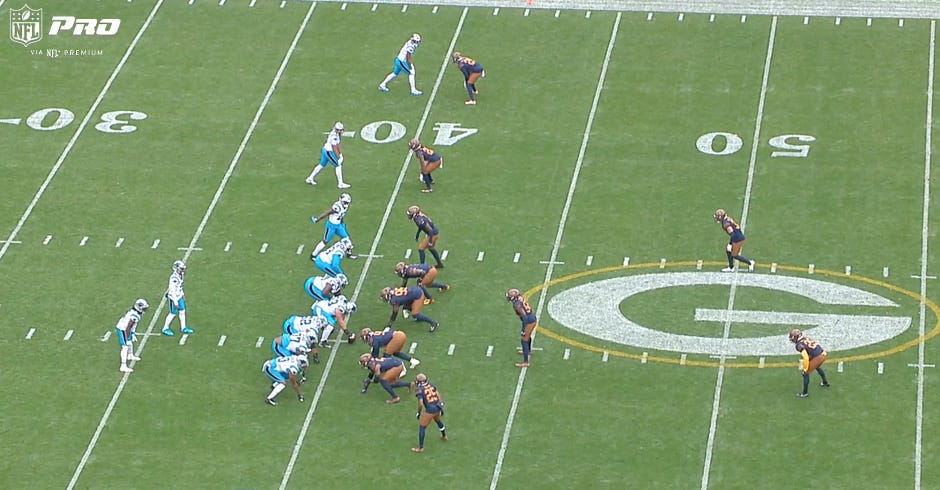
So, you’re going to see a lot of the principles from Green Bay’s defense installed in Miami. Duggan has stressed multiple fronts, but within a structure. They won’t be an all-out blitzing team, but stress disguised pressures, attack with four, and confuse with their alignments. The pressure will come from the scheme and confusion.
You can expect a 43/4-2-5 hybrid with nickel being their base.
This was Green Bay’s most deployed lineup in 2025 (and you could see variations in deployment/alignment):
Defensive Line Unit
Under Duggan, the unit will be built on penetration, and not read and react. They’ll be asked to attack upfield, hit their gaps, and disrupt the QB. They’ll show 5-6 rushers, but maybe send 4. This is designed to cause TFLs, pressures, and free runners.
Chop Robinson is looking like the alpha of the unit and could have a full-time role. He’ll be the primary edge and should have a wide alignment and be used as a speed rusher. The scheme should create open rush lanes and isolate him 1-1 with the tackles.
Zach Sieler should remain as the 3-tech/4i and be that full-time interior anchor and disruptor. He’s perfect for the scheme, as he thrives with hitting gaps and stunts. He should see double-digit TFLs once again this season.
Kenneth Grant could have a breakout season. He’s not going to be a traditional nose, but he’ll attack gaps, in addition to absorbing blocks and space. He’ll be asked to be more aggressive, so he has tackle upside. He’ll be a sleeper in DT-required leagues.
Linebacker Unit
I think the linebackers should remain productive in this scheme. They will be asked to attack gaps quickly and not just react to the play. They’ll trust the defenders up front to open lanes and force ball carriers outside, so they can finish plays and tackles. The LBs should have clear run lanes while also hitting their gaps.
Since nickel is the primary base, their defense should feature two off-ball LBs. Jordyn Brooks has been the subject of some trade rumors, but as long as he’s on the roster, he’ll remain an LB1. We’ll see if Tyrel Dodson remains the green dot, but he should be the LB2 of the defense and remain a full-time player.
Defensive Back Unit
You’ll probably see single-high shells and pattern matching; not pure zone and not pure man. The DBs will be assignment-driven, not freelancing. The safeties should be interchangeable, so a two-high look pre-snap with one dropping into the box and one manning the deep middle. Corners will play aggressively with press/match coverage.
There will be opportunities for safeties to play downhill.
I’m sure the Dolphins will address the safety position in the draft, but as of now, Dante Trader should be that line of scrimmage safety.
IDP Targets in 2026
I’m targeting Chop Robinson as a cheap breakout, as his ADP should be suppressed after a disappointing 2025. Zach Sieler is a DL2 target, and Kenneth Grant is a sneaky DT3 in DT/True Position. Jordyn Brooks and Tyrel Dodson should see three-down roles. Dante Trader is a DB sleeper, especially if they don’t address safety early in the draft.
New York Jets
Although Brian Duker was hired as the defensive coordinator, he probably won’t be calling the plays, as that will fall on Aaron Glenn.
Duker will probably focus on development and execution.
Defensive Philosophy
The philosophy and scheme will continue to have Glenn’s DNA. Heavy man coverage (30.9% in 2025), multiple fronts, and violent finishers at linebacker, who can also get to the QB. You probably won’t see defined safety labels, as it’s more about using their traits.
Kurt Angle adopted the three I’s; Glenn is adopting the three P’s: press, pursuit, and power. Glenn looks to take a more aggressive approach, stressing turnovers and ball-hawking for his DBs.
It does look like Glenn is shifting from a base 43 to 34, though they won’t live in their base. The trade for T’Vondre Sweat signaled that shift, as he’s ideal for the middle of a 34.
Defensive Line/EDGE Unit
The Jets need some real help here. They ranked 31st in sacks (26), and only the 49ers had fewer (20). They traded Quinnen Williams last season and Jermaine Johnson this offseason. Glenn wants edges with power profiles and two-way players who can set the edge and get to the QB.
Will McDonald and Tyler Baron remain, and they added Kingsley Engabare and Joseph Ossai in free agency. I can see McDonald and Ossai being the first two edges, with Engabare acting as a rotational/third edge.
The front will focus on stopping the run and getting to the QB second. This could be a rotation-heavy line, built for the grunt work, not IDP stats. They’ll be responsible for freeing up the edge rushers and keeping the off-ball linebackers clean to get to the ball carrier.
Linebacker Unit
The linebackers are expected to be able to run downhill and get tackles, and get to the QB. Even though they’ll be a base 34, I’d expect to see them in nickel/2-LB packages for most of the game, so two off-ball LBs should be featured.
Demario Davis returns to the Jets after spending the last eight seasons with the Saints. Davis just turned 37 and has missed just one game in his career. When will the wheels fall off? I’m projecting him to wear the dot this year, and he brings the attitude Glenn’s defense needs. Davis has 120+ tackles in three straight seasons.
Jamien Sherwood should slot into Quincy Williams’s LB2 role. Last season, Sherwood recorded 154 tackles, but struggled in pass coverage; however, he was decent in the run and as a blitzer. Two traits Glenn covets.
Defensive Back Unit
In Glenn’s system, the line of scrimmage safety was the IDP target. They blitzed, dropped in coverage, and were around the ball in run defense.
Malachi Moore played that role as a rookie and recorded over 100 tackles. The Jets did bring in Dane Belton to be a veteran piece in the safety room, and they traded for Minkah Fitzpatrick.
The Jets play more press/man, so their corners will have upside for INTs and breakups. There really isn’t anyone to target for IDP. Maybe Brandon Stephens.
IDP Targets for 2026
From the line, I’m probably targeting Joseph Ossai as a DL3/4, and Will McDonald as a DL3. I’m sure they’ll address edge in the draft. Demario Davis and Jamien Sherwood should have LB2 value, as they should both see full-time roles. The safety room is crowded, and I might take a wait-and-see approach on who’s aligning where.
Pittsburgh Steelers
The Steelers found themselves needing a new head coach for the first time in decades and went with Mike McCarthy.
McCarthy tabbed Patrick Graham as his defensive coordinator.
Defensive Philosophy
Graham has multiple limbs from different coaching trees, including Bill Belichick, Steve Spagnulo, and Brian Flores. Graham has taken the principles from Belichick, and take away what the offense does best. He’s mixed in some of Spagnuolo’s exotic fronts and pressures, and sprinkled in some Cover-4.
Graham stresses adaptability, and he says the 34/43 is antiquated, and wants guys who can simply rush the QB, stop the run, and cover. McCarthy said he wants to remain a 34 base with a two-high shell and have a big man or two control the point of attack.
Graham has used simulated pressures, and also freeing up his linebackers to run free. He doesn’t want to sacrifice coverage integrity.
Defensive Line/EDGE Unit
The front is the anchor. Generate interior pressure that frees up everyone else around them. There should be plenty of pressure and sack equity for this group.
Even though Cameron Heyward will be 37 when the season kicks off, he’s still one of the core pieces of the group. Heyward remains the tone setter, but Derrick Harmon and Keanu Benton are expected to develop and contribute.
The edge/OLBs are the engines of the pass rush; the equivalent to the LEO in a 43. The Steelers have three capable pass rushers in TJ Watt, Alex Highsmight, and Nick Herbig. After a down year, Watt is expected to bounce back. However, I think Highsmith and Herbig are the two who’ll benefit. I think Herbig sees a bigger jump in usage. The group, overall, might see fewer coverage and run snaps.
Linebacker Unit
The linebackers could be an IDP-friendly group than in year’s past.
While with the Raiders, Graham coordinated a defense that allowed Robert Spillane to record 306 tackles over two seasons. Devin White enjoyed a career-year with 174 tackles (2nd in the NFL). Graham’s light box keeps them clean from linemen reaching the second-level, allowing them to flow to the ball.
Although they graded relatively poorly, Patrick Queen and Payton Wilson stand to be the beneficiaries in IDP. Maik Harrison and Cole Holcomb are also still on the roster, and it’s possible they address off-ball LB in the draft.
Defensive Back Unit
Graham loves using versatile, hybrid defensive backs and using a big nickel/LB hybrid who can play the run and drop in coverage.
The safety group consists of DeShon Elliott, Jaquan Brisker, and Darnell Savage. I think the name to watch is Brisker. He played that coverage/box role in Chicago and I think he could be the first man up to compete for snaps. Brisker has the athleticism and physical presence Graham looks for.
I would expect Jalen Ramsey to remain as the nickel corner.
IDP Targets for 2026
In 2026, I’m targeting Derrick Harmon as a high upside DT2 in DT-required leagues. Cameron Heyward is still worthy IDP target. Until something changes , I’m expecting Patrick Queen and Payton Wilson to be the key off-ball LBs. I’m targeting Jaquan Brisker as the safety of this group.
Tennessee Titans
The Tennessee Titans brought in Robert Saleh as their head coach, and he’s tabbed Gus Bradley to head up his defense.
Bradley brings a lot of experience and is a disciple of the Pete Carroll/Monte Kiffin tree.
Defensive Philosophy
Bradley builds a fast and violent defense. He’s not going to overwhelm the offense with complex looks, but he stands on execution. He’s not going to have 137 different coverages or 59 different blitzes at the expense of execution.
He tailors the scheme to his players. If his nickel is a run stopper, he’s going to get him in on run fits. Flexibility is key.
Bradley runs a 43 base with Cover-2/3 principles, a Tampa 2/Cover 3 hybrid that he perfected with the Seahawks. It’ll be an IDP-friendly scheme, with a traditional 4-man run and his off-ball linebackers dropping into underneath zones.
Saleh will probably call the plays, but Bradley will develop and install the defense.
Defensive Line Unit
Bradley uses a wide-9 and aggression when it comes to his edge rushers. The goal is speed and getting around the edge at all costs. Get pressures without blitzing by scheming the pressure for your players. He also uses stunts/twists.
The LEO is his centerpiece. It’s the weakside end and is lined up in a wide-9 position to the open side. The goal is simple: pin your ears and get after the QB. The 1/3-techs, and big ends eat the blocks, control gaps, and protect the LEO from double-teams.
Jermaine Johnson is shaping up to be the LEO and has IDP upside (for now). John Franklin-Myers is Bradley’s “Big End.” He’s a versatile lineman who can get to the QB and disrupt the run. In 34 looks, he’ll shift inside. I would imagine they address edge in the draft.
Jeffrey Simmons is the cornerstone of the defense. Bradley’s scheme can generate pass-rush numbers for an elite player like Simmons.
Linebacker Unit
Bradley will probably live in nickel/2-LB defenses, but the LB3 (SAM) will act as another defensive lineman. The MIKE keeps the weak side clean, taking on blocks and chasing down ball carriers.
Cedric Gray should continue to play the weak-side/RILB, and this is usually the playmaker of Bradley’s defense. Tackles are typically funneled to the weak-side. Gray is in a great spot to repeat his 2025 tackle numbers.
Cody Barton, if he remains the green dot, will continue to drive traffic and act as another second-level defender. I’m expecting similar numbers from last year.
Defensive Back Unit
In Bradley’s scheme, the strong safety has been the IDP producer, and it could be Amani Hooker. His zone schemes create box safety roles, and his Cover-3 generates tackle volume.
Nick Cross enjoyed a highly productive season under Bradley in 2025. Amani Hooker is currently set to play that role and carries IDP upside as he could see 100+ tackles.
If the Titans live in nickel, Kevin Winston has tackle upside as the slot.
IDP Targets for 2026
Jeffrey Simmons is a target in all formats, and Jermaine Johnson is a sneaky sleeper as a DL3. I’m targeting Cedric Gray as an LB1. You could get Amani Hooker cheap and have DB2 upside in Bradley’s system, and I also like Kevin Winston.
Be sure to subscribe to The IDP Show on Apple, Spotify, or YouTube.
Play in several IDP leagues and have been trying to research how the new incoming DC's systems and coaches will affect the players on my rosters. Great article and thanks!
aren’t there 10 new defensive coordinators in the AFC this year?
I think New England and Pittsburgh also have new DCs, no?
New England Patriots: Zak Kuhr (promoted from inside LBs coach) takes over as defensive coordinator.
Pittsburgh Steelers: Patrick Graham (formerly Raiders DC) was hired by new head coach Mike McCarthy.